
Parts of a sentenceOnline version
by Atenas Leticia García Gámez
1
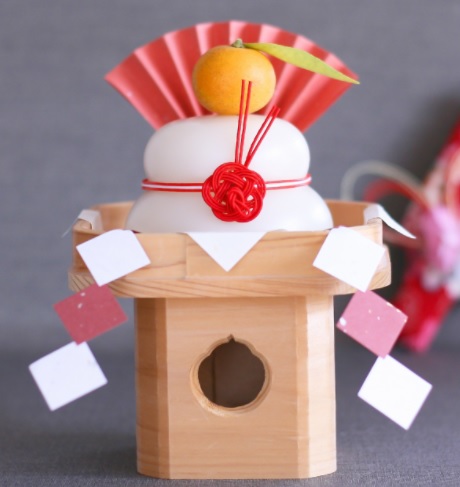
In the sentence: "Traditionally, Japanese offered the Shinto gods the New Year's kagamimochi ornament, prepared with 2 rounded mochis and a tangerine on top" The noun that corresponds to the subject is:
2
In the sentence: "Traditionally, Japanese offered the Shinto gods the New Year's kagamimochi ornament, prepared with 2 rounded mochis and a tangerine on top" The verb that corresponds to the subject is:
3
In the sentence: "Traditionally, Japanese offered the Shinto gods the New Year's kagamimochi ornament, prepared with 2 rounded mochis and a tangerine on top." The direct object is:
4
In the sentence: "Traditionally, Japanese offered the Shinto gods the New Year's kagamimochi ornament, prepared with 2 rounded mochis and a tangerine on top." The indirect object is:
5
In the sentence: "Traditionally, Japanese offered the Shinto gods the New Year's kagamimochi ornament, prepared with 2 rounded mochis and a tangerine on top." The complement of place that corresponds to the verb is:
Explanation
Remember to ask the questions from the tutorial
Remember to ask 'What action?' in relationship to the subject
As the question (what + verb)
The indirect object is the one to receive the direct object.
Complements of place are expressed with PREPOSITIONAL PHRASES usually and can be associated to any element of the sentence to explain its position or location.