Explanation
Desert in northern Chile, one of the driest places on Earth.
Rich in minerals, especially copper and nitrates, with sparse vegetation and very little rainfall.
One of the longest mountain ranges in the world, stretching along South America’s west coast
Formed by tectonic plate movement, creating earthquakes and volcanoes
Home to diverse climates and ecosystems, from glaciers to rainforests
High-elevation plateau in the Andes of South America, mainly in Bolivia and Peru (also parts of Chile and Argentina).
Cold, dry climate with thin air; supports grazing, potatoes, quinoa, and has large mineral resources (tin, silver, lithium).
Fertile lowland plains of Argentina and Uruguay (also southern Brazil).
Rich soils and mild climate make it ideal for wheat farming and cattle ranching (major beef producer).
World’s largest river by volume, flowing across northern South America through the Amazon Rainforest.
Key transportation route and water source; supports biodiversity, fishing, and human settlement.
Just water but a bit colder
Man-made waterway in Panama connecting the Atlantic and Pacific Oceans.
Shortens global trade routes, saving ships time and fuel by avoiding South America.
Tropical grassland plains of Venezuela and Colombia along the Orinoco River.
Seasonally flooded, used mainly for cattle ranching and some farming.
Savanna region of central Brazil with grasses, shrubs, and scattered trees.
Important farming area, especially for soybeans and cattle, despite poor soils.
Chain of small Caribbean islands stretching from Puerto Rico to Venezuela.
Volcanic and tropical, with economies based on tourism, agriculture, and trade.
Large Caribbean islands: Cuba, Hispaniola (Haiti & the Dominican Republic), Jamaica, and Puerto Rico.
Mountainous with fertile valleys, supporting agriculture, tourism, and large populations.
Mountain range in western Mexico, running parallel to the Pacific coast.
Mineral-rich and forested, affects climate by creating rain shadows and supporting agriculture in valleys.
Mountain range in eastern Mexico, running parallel to the Gulf of Mexico.
Rich in minerals and influences climate by blocking moist air, creating wetter coasts and drier interiors.
Major river forming part of the border between the United States (Texas) and Mexico.
Important for irrigation, water supply, and limited hydroelectric power in an otherwise dry region.
Southern tip of South America in Chile, where the Atlantic and Pacific Oceans meet.
Notorious for rough seas and strong winds, historically a key shipping route before the Panama Canal.
Region in southern Argentina and Chile, known for plateaus, steppes, and mountains.
Sparse population with economic activities like sheep ranching, mining, and tourism.
Narrow natural waterway at the southern tip of South America, between mainland Chile and Tierra del Fuego.
Important shipping route connecting the Atlantic and Pacific Oceans, historically safer than rounding Cape Horn.


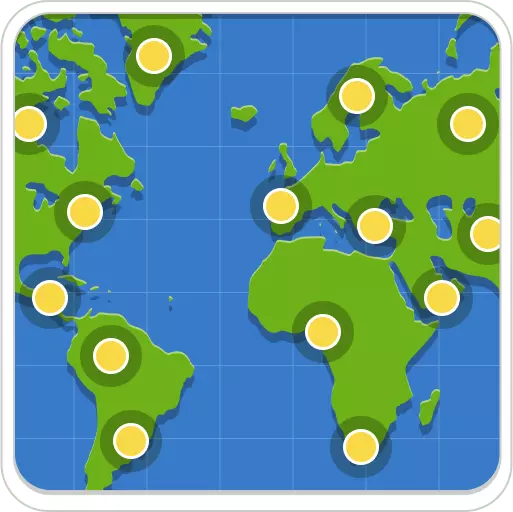

 Identify the correct continent and ocean
 heart
heart