
Make educational games in no time

What do you want to teach today?
 Do you have a GamePin?

Create a growing variety of game types
-
Word Search Puzzle
2,609,817 made -
Crossword Puzzle
1,957,396 made -
Froggy Jumps
1,919,406 made -
Matching Pairs
1,338,355 made -
Quiz
888,834 made -
Fill in the Blanks
658,579 made -
Alphabet
628,504 made -

Map Quiz
477,132 made -
Memory
454,418 made -
Matching
364,103 made -
Yes or No
352,635 made -
Unscramble Letters
346,430 made -

Video Quiz
289,088 made -
Unscramble Words
246,655 made -

Riddle
246,626 made -

Slideshow
71,221 made -

Line Up
53,181 made -

Dictation
47,475 made -

AsterQuiz
27,532 made -

Dialogue
27,496 made
What are the positive effects of learning games?
Decades of research on game-based learning point the same way.

Active engagement
With a game in front of them, students pay attention and join in. And the more they get into the game, the more they learn. See study

Real motivation
Challenges, points and instant feedback: they want another go. A meta-analysis of 16 studies measures it. See meta-analysis

Better retention
Practice through repetition, without the boredom, is what makes learning stick: across 77 studies, games come out ahead on both learning and retention. See meta-analysis

Problem-solving practice
Working your way out of a challenge is problem-solving practice. 21 studies back it up. See meta-analysis

Real confidence
Seeing the right answer right away shows students they're making progress. In maths, games lifted students' confidence along with their grades. See study

No fear of getting it wrong
Getting it wrong in a game costs nothing, so students dare to try. It's a core design principle of learning games. See study
That much we know about games in general. For Educaplay in particular, keep scrolling.
Proven benefits
Your students take part more and score higher. Don't take our word for it.
364 independent studies across 15 countries measure it. In a high-school chemistry class, the group practising with Educaplay went from 5.0 to 9.3; the control group, from 5.2 to 6.2. In a 7th-grade English class, participation rose from 68% to 90%. And when something ties or doesn't improve, we say so too.
- 364independent studies
- 74%with data, not impressions
- 10in top-tier journals
-

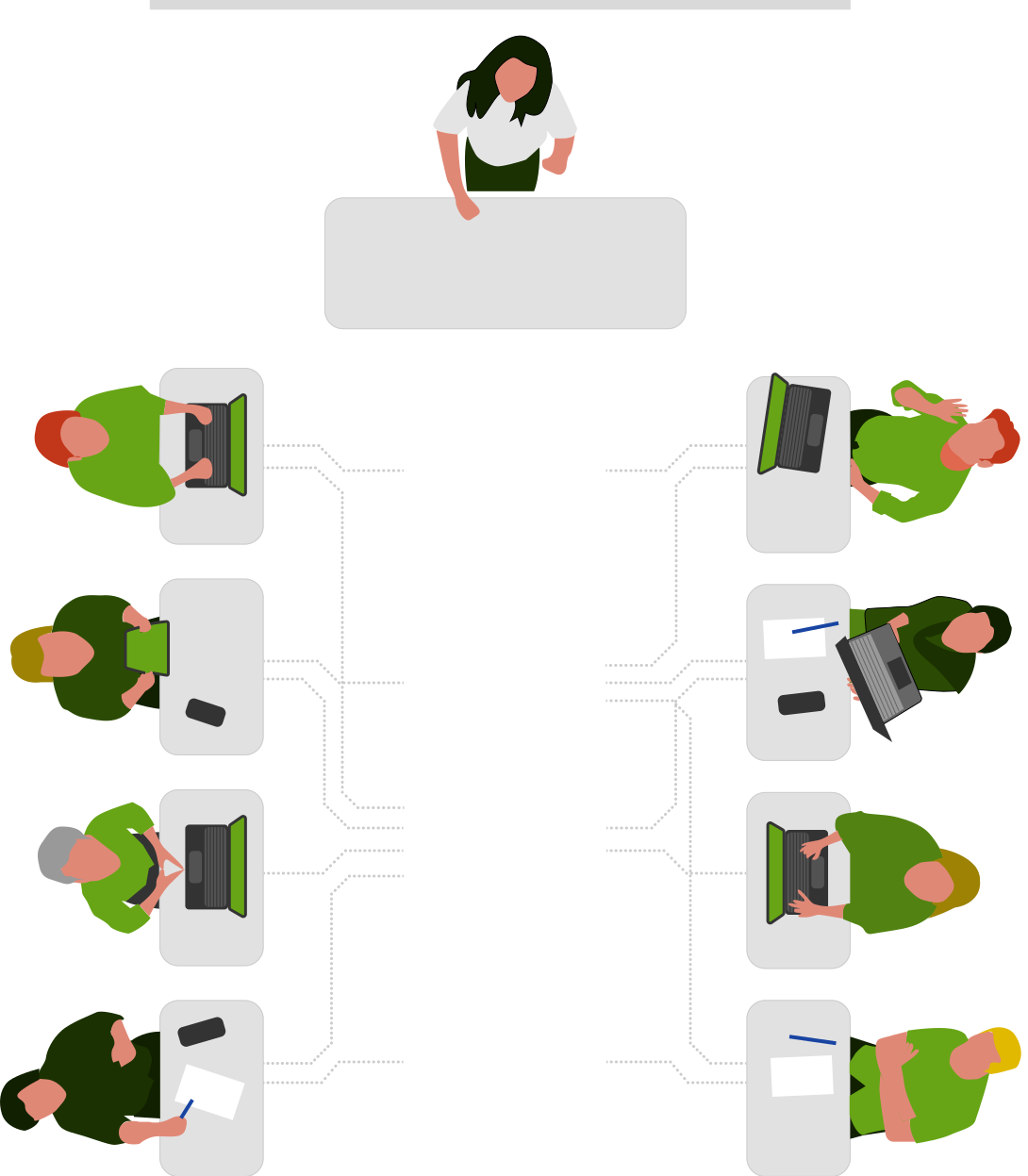
Big screen
-

QR code
-

Direct link
-

Paper and pencil

-

Iframe
-

WordPress plugin
-

HTML code





What do our users think?

Matthew Hale
CEO We Gonna Learn Today

I love how this platform allows me to create material for students, teachers, and communities to stay engaged while learning the information. They tend to want to do it over and over till they get 100%.

Edmar Caie
Business English Teacher
Educaplay is a very useful tool for making your lessons interesting and interactive. It is great for practising vocabulary and grammar in a fun and interactive way. The exercises are easy to make and adapt to the needs of any student.

Anthony Diaz
Director at ExploreFrench
I use Educaplay games on my website to teach French, and I couldn’t be happier with the experience. The integration is super easy, which makes it really convenient to embed interactive content directly into my courses. What I love most is the variety of game formats—they offer so many different ways to practise key language skills, whether it’s vocabulary, grammar, communication, or even phonetics. The multimedia aspect is a huge plus: being able to add audio, video, or images in most games really helps bring the activities to life and makes the learning experience more dynamic. On top of that, the team is constantly improving the platform, including games' layout (games are beautifully designed, and that's very motivating for learners) and they’re always quick to respond whenever I need help. A great tool for language teachers and learners alike.

Jan Barbee
High School Botany and Biology Teacher
Educaplay has been an amazing game changer for my classroom. It is one of the few programs that not only has review games, but self-grading crossword puzzles, cloze paragraphs, mapping/Labeling, Sequencing, Quizzes and numerous other activities. Important content is delivered in an engaging way to my students. They get immediate feedback, and I am relieved from grading those tasks - even though those types of tasks are critical to develop a foundation for greater understanding. This allows me to focus my time on application of concepts and providing review and feedback. I've even used Educaplay in my Escape Rooms and Clue based mysteries. Students work through my Slides based scenarios, clicking on embedded Educaplay games, tests, or other activities. Upon conclusion, I leave automatic completion feedback messages for the students. They use those feedback statements to solve their mystery or “escape room”. The students love these types of interactive, problem solving activities that serve as both a vocabulary and concept review. I love this application for the engagement, excitement, and enrichment for my students.

Delphine Woda
French Teacher
I use Educaplay to create exercises for my students who learn French. I love the variety of templates, from regular and classic “fill in the gaps” and dictations to more fun games like crosswords. Creating an exercise is very easy and quick, and my students from all ages love them.