PasaPalabras IT de Ivan Falton, Juancho y AlbertoOnline version
Pasapalabras en ingles de informatica
A
B
C
D
E
F
G
H
I
J
K
L
M
N
O
P
Q
R
S
T
U
V
W
X
Y
Z
Starts with
A
A finite sequence of well-defined, computer-implementable instructions, often used to solve a class of specific problems or to perform a computation, which must always terminate after a finite number of steps.
Starts with
B
A communication subsystem that transfers data between components inside a computer, or between computers. It acts as a shared transmission medium capable of carrying distinct types of signals, specifically address, data, and control information.
Starts with
C
A hardware or software component that stores data so that future requests for that data can be served faster. It bridges the speed gap between the processor and main memory by exploiting the principles of temporal and spatial locality.
Starts with
D
A computer program that runs as a background process, rather than being under the direct control of an interactive user
Starts with
E
The process of converting readable data into an encoded format to prevent unauthorized access or understanding.
Starts with
F
A control flow statement used to execute a block of code repeatedly, typically when the number of iterations is known in advance.
Starts with
G
A visual way to interact with a computer using a mouse, icons, and windows, instead of typing text commands
Starts with
H
A function or process that converts an input of any size into a fixed-size string of characters, typically used for fast data lookup or verifying file integrity.
Starts with
I
A program that directly executes instructions written in a high-level language, translating them line-by-line without compiling the entire code first.
Starts with
J
A lightweight data-interchange format based on JavaScript syntax, easy for humans to read and commonly used to transmit data between a server and a web application.
Starts with
K
The central core of an operating system that controls the hardware and manages memory, CPU, and system resources.
Starts with
L
A collection of pre-written code, routines, or classes that developers use to add functionality to a program without writing it from scratch.
Starts with
M
A unique identifier assigned to a network interface card for use as a network address, often referred to as a physical address.
Starts with
N
A special value or keyword in programming used to indicate the intentional absence of any value or object reference.
Starts with
O
A self-contained entity in Object-Oriented Programming that consists of data and procedures to manipulate that data, created from a class.
Starts with
P
An intermediary server that separates end users from the websites or services they browse, often used for security, filtering, or caching data.
Contains
Q
Contains Q: The standard domain-specific language used for managing, storing, and retrieving data held in a relational database management system.
Starts with
R
The conventional name of the user who has all rights or permissions (superuser) in all modes on Unix-like operating systems.
Starts with
S
A list of commands or a small program executed by an interpreter to automate tasks, rather than being compiled into a full application.
Starts with
T
A core networking protocol that establishes a reliable connection between devices and guarantees that data packets arrive in the correct order and without errors.
Starts with
U
A powerful, multi-user operating system developed in the 1960s that serves as the foundation for many modern systems, including Linux and macOS.
Starts with
V
A software emulation of a physical computer that runs its own operating system and applications independently of the host machine.
Starts with
W
A control flow statement or loop that allows code to be executed repeatedly as long as a specified condition remains true.
Contains
X
A numbering system with a base of 16, using digits 0-9 and letters A-F, commonly used to represent memory addresses or colors.
Contains
Y
Contains Y: A type of malicious software designed to gather information about a person or organization without their knowledge
Starts with
Z
A process in an operating system that has completed execution but still has an entry in the process table because its parent has not yet read its exit status.
|


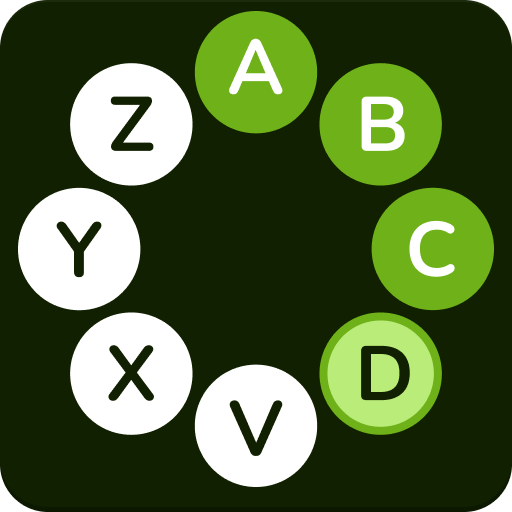


 In this game there is a wheel with 24 letters of the alphabet (not includin "q", "x"). The aim of the game is to complete the alphabet wheel by saying yhe correct word for each letter in five minutes.