Or write to support@educaplay.com


Matching Pairs: what it is and how to make one
We are committed to continuously improving your experience; some elements of the video interface may not match the current one.
What it is
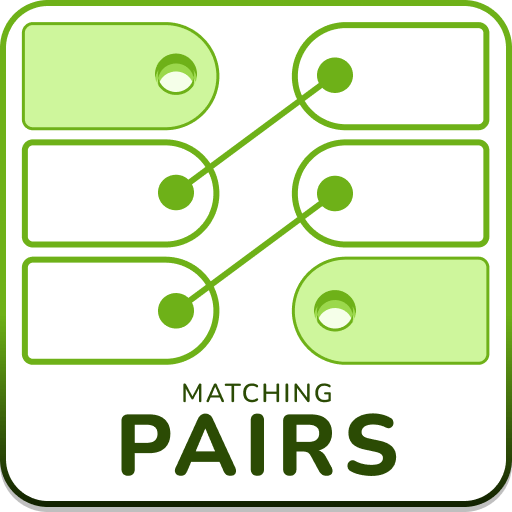
In Matching Pairs, players have to connect pairs of items, one in each column.
Each item can contain text, an image, audio or a combination.
Examples of use
- Languages: words with their translation or with their image.
- Science: chemical elements with their symbols, organs with their function…
- History: dates with events, figures with their achievements.
- Vocational training: technical terms with their definitions.
- Early childhood education: animals with their names, numbers with their representation.
How to create a Matching Pairs with Ray
- Click Create game and select Matching Pairs.
- Enter a topic, add instructions and/or attach a file with the content.
- Ray automatically generates a game ready to publish (with a title and description). You can review and change anything you like before publishing it.
Ray's advanced options
The gear icon gives you options to configure how Ray generates the game. Some are common to all game types:
- Output content: choose text only, or text plus automatically generated speech. Speech is capped at 1,000 characters in total per account on the Basic and Advanced plans; on the Academic plan and Commercial plan it is unlimited.
- Output language: the language of the game content. If you don't specify it, Ray detects it from the prompt or the file.
- Difficulty: easy, medium (default), hard, or a custom level (for example, “for primary school students”).
Matching Pairs also has specific options:
- Pairs: how many to create (8 by default), or as many as the content you attach contains.
- Screens: splits the pairs across several screens within the same game (for example, 2 screens with 5 pairs each).
Source library
With the Sources button you can upload files to Ray (PDF, Word, images…) or select your own games for it to use as content for the new one. For example, generate a Matching Pairs with organs and functions from the PDF of a teaching unit, or turn a Memory into a Matching Pairs.
How to create a Matching Pairs without Ray
- Click Create game and select Matching Pairs.
- Close the Ray window.
- Enter the pairs, placing the matching item below each one.
Each item accepts text, images and/or audio. If you have many pairs, you can split them across several screens so as not to overwhelm the player.
Game options
- Lives: the maximum number of mistakes (unlimited by default).
- Time: the time limit to complete the game (unlimited by default).
With an Advanced plan you can remove the ads, add a background image, change the visibility (Public or Hidden), configure player identification (Optional, Required or no method), hide elements of the interface (Ranking, Restart, Social media or Correct answers) and add a custom final message.
With an Academic plan you can restrict the visibility to your guests or to the integrations you create (Google Classroom, Moodle, Canvas…), and remove the player identification link.
With a Commercial plan you can also customize the game with your logo and corporate footer, choose the colors and hide the Educaplay brand.
Information and publishing
On the Information tab you set up what your player will see before and during the game. Ray automatically generates the Title and Description; if you created the game without Ray, you add them yourself. Here you also choose the Language of the game interface (you can present the game to your players in any of the 27 available languages, regardless of the language of the content), set the Education level and add Tags so your game is easier to find in the search engine. Before publishing, use Preview to check that everything looks the way you want.
Frequently asked questions
What are screens and when is it worth using more than one?
They let you split the game's pairs across several pages. It's useful when there are many (for example, 16 pairs split across 2 screens of 8).
Can I import a list of pairs I already have?
Yes. Paste or attach your list in the Ray box or with the Sources button.
Can I add images or audio to the items?
Yes. Each item accepts text, audio and images, and you can generate the voice reading automatically.
Can I change the language of the game interface?
Yes. On the Information tab you can choose from the 27 available languages: Afrikaans, Aragonese, Asturian, Basque, Catalan, Chinese, Czech, Dutch, English, Estonian, French, Galician, German, Greek, Hindi, Indonesian, Italian, Japanese, Polish, Portuguese, Romanian, Russian, Slovenian, Spanish, Swedish, Turkish, and Ukrainian. The interface language is independent from the content language: you can have a game written in English and show the interface in Japanese for your Japanese students, for example.
Which features require a paid plan?
With the Advanced plan you remove the ads, add a background image, manage visibility and player identification, hide interface elements and add a final message. With the Academic plan you can also restrict access to your guests or to your integrations (Google Classroom, Moodle, Canvas…). With the Commercial plan you customize the game with your logo, corporate colors and hide the Educaplay brand.